
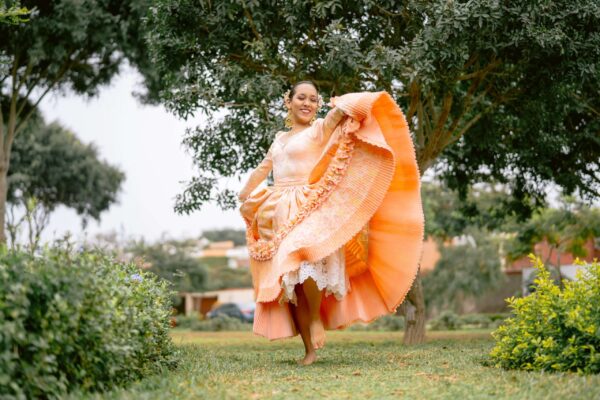
Quinceañera is one of the most important events in the life of every Latin American girl. This celebration is associated with the 15th birthday of girls, who gather their friends and all their closest relatives as support. After all, for every girl, turning 15 marks an important event in her life – the transition from girlhood to womanhood and gradual maturation. According to cultural traditions, girls wear luxurious ball gowns that must have a voluminous skirt. Before this, the girl selects chamberlains and damas (ladies-in-waiting), who will accompany her in preparation for the upcoming celebration. In this overview, we’ll take a closer look at the rich traditions and fascinating facts from the history of the Quinceañera celebration.
Origins and Traditions of the Quinceañera Celebration
Quinceañera is already deeply rooted in culture and has a fairly long history that is directly connected to the place where these traditions originated. Today, this celebration is observed in Mexico, Latin America, the United States, and the Caribbean countries. It is recognized by all Spanish-speaking/Latin American peoples in different countries around the world. Despite this, the homeland of Quinceañera is considered to be the territories inhabited by the Aztecs and Maya.
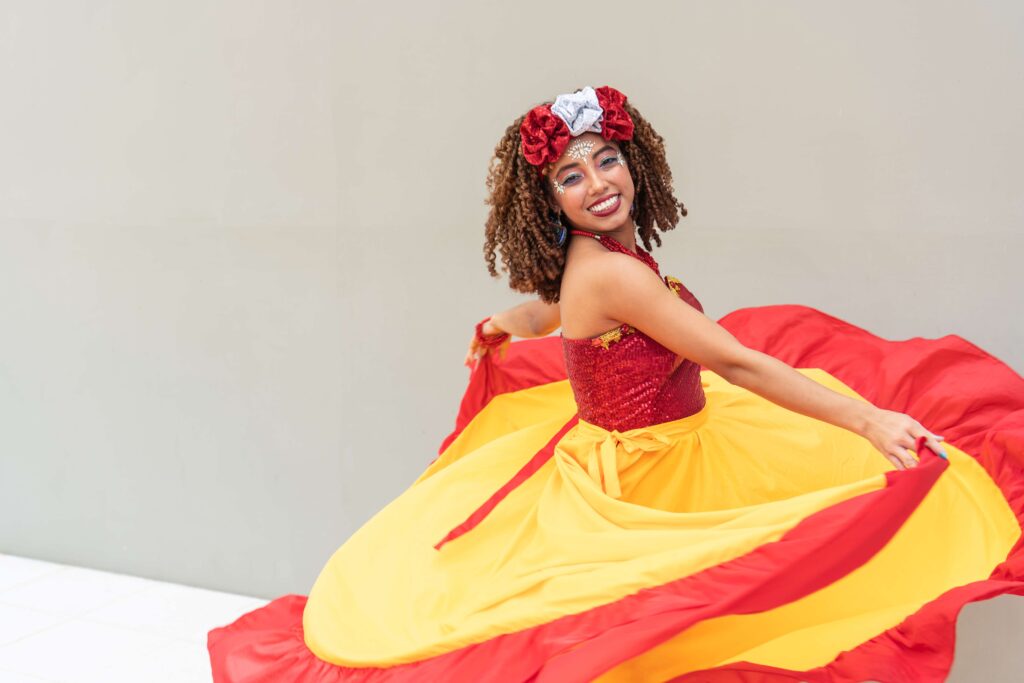
Some scholars believe that this celebration may have resulted from the active mixing of different cultures, namely: Spanish (including features of Roman Catholicism) with the culture of indigenous peoples who were Spanish colonies. This is a full-fledged rite of passage that has many similar elements to a wedding ceremony. Common characteristics include the presence of luxurious outfits, a large number of invited guests, numerous dances, and brightly decorated palaces (halls).
The Aztecs and Maya believed that upon turning 15, every girl was ready for marriage. This was the period when a girl “transformed” into a woman and could build her own family. Chamberlains or suitors could line up to draw the girl’s attention to themselves and marry her.
As a result, it is generally accepted that every girl reached her coming of age at 15, and therefore by this time she was expected to have mastered all the customs that were important for women of that time. For example, girls were required to know how to manage a household – weaving, cooking food. This was their main preparation for upcoming marriage, childbirth, and subsequent child-rearing.
At the beginning of the celebration, there must be a mass (“misa”), during which the girl demonstrates her devotion to God and the Virgin Mary. Previously, girls had to make a promise before God (they promised to follow Christ and not lose faith in religion). In modern traditions, several more elements have been added: girls are given a Bible, rosary beads, a tiara, and a ring. In this case, the rosary beads and Bible serve as symbols of faith.
Why Does Religion Become an Integral Part of Quinceañera?
The main reason is connected to the Spanish settlers who arrived on these lands. They brought and told about Catholic traditions and various rituals that became rooted in this area. The Spanish gradually settled in different countries around the world, which contributed to the spread of Quinceañera. For this reason, this celebration has long since crossed the borders of modern Mexico, and Catholicism is considered an integral part even in the conditions of the modern world and traditions.
Modern Customs of the Quinceañera Celebration: Dances
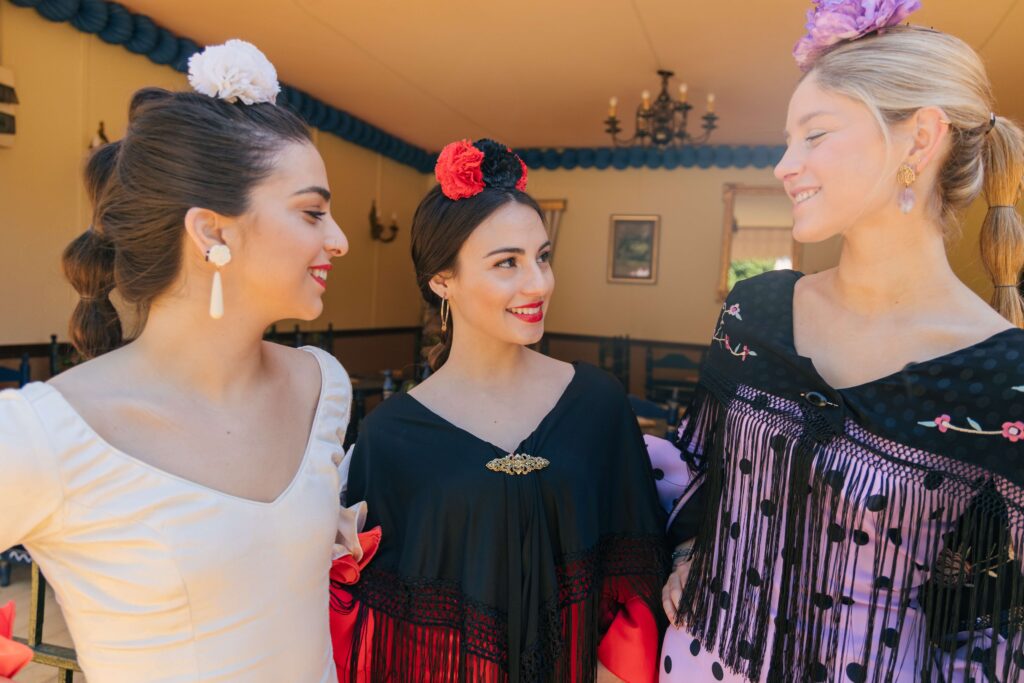
The traditions of the celebration are directly connected with a huge number of gifts and unique surprises. One of the main surprises is the dances – waltz and baile sorpresa. Moreover, the first dance of the evening is, in most cases, a dance between the father and his daughter who has turned 15. This symbolizes strong family values, respect, and relationships. For this dance, they choose the most calm and slow melody. However, today some innovations are noted: for example, a father-daughter dance to more rhythmic music, or a daughter’s dance with her mother instead of her father/another person who played a special role in her life.
The second dance is considered to be the quince or waltz, which the girl performs only with chamberlains or with chamberlains and damas. This is also a slow dance, but supplemented with several interesting tricks: the chamberlains lift the quinceañera.
The third dance is performed by the quinceañera with her court – this is the baile sorpresa. This dance must be as rhythmic and energetic as possible, with many tricks and various songs. The main distinguishing feature of this dance from all the others is the spectacular costume change – these should be quite bright outfits, which are changed not only by the quinceañera but also by her court.
The official final dance of the evening is performed by the padrinos and madrinas (there can be several of them). These are people who helped and paid for something during the party organization process.
Photographer and Live Music as Integral Elements of the Celebration
The photographer’s task in this case is to capture the entire party: from the very beginning to the logical conclusion of the celebration. After all, photographs play an important role in this event. The photos must capture not only the quinceañera herself, but also her with her damas and chamberlains, with her family. The Quinceañera celebration is a family event where it is important to gather as many family members as possible.
An equally important cultural factor is the presence of live music, the use of mariachi. This is necessary in order to provide the opportunity to fully experience the culture and value of traditions.
The Quinceañera’s Dress
The most important part of the celebration is the dress, which attracts the eyes of everyone around. This is a unique outfit that must differ from a standard ball gown. Considering its length and voluminous shape, the girl is constantly helped by her mother, aunt, or friends. Today, there are many specialized stores where you can purchase unique dresses specifically for this celebration. These are quite expensive and large dresses.
In addition to such an outfit, it is necessary to take care of makeup, appropriate hairstyle, and manicure.
During the celebration, the girl can change her shoes. For example, throughout the day she can wear sneakers (or any other comfortable shoes) that are not visible under the long dress, and at the party she changes the sneakers for heels. This also represents special symbolism, which consists of renouncing childhood and childish thinking, transforming into a woman, acquiring femininity.